

Automated 3-Way Matching for PO, GRN, and Invoice Reconciliation


Solvision Automated 3-Way Matching for PO, GRN, and Invoice Reconciliation to Reduce Exceptions and Prevent Overpayments
Introduction
If you’ve ever worked in accounts payable, you know the drill—invoices pile up, purchase orders don’t quite match the goods received notes, and suddenly you’re drowning in discrepancies. It’s tedious, time-consuming, and honestly? A recipe for costly mistakes. That’s where automated 3-way matching comes into play, and Solvision’s taking it to the next level.
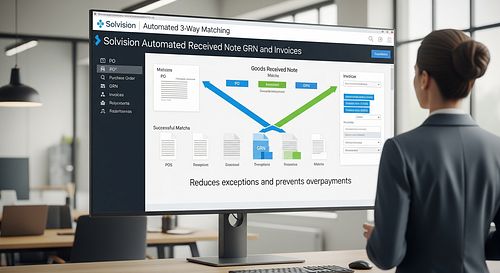
In today’s fast-paced business environment, manual invoice processing isn’t just inefficient—it’s a financial risk. Companies lose thousands, sometimes millions, due to duplicate payments, pricing errors, and invoice fraud. But here’s the good news: technology’s evolved to handle these challenges head-on. Solvision’s automated 3-way matching system reconciles purchase orders (POs), goods received notes (GRNs), and invoices seamlessly, slashing exceptions and preventing overpayments before they happen.
Let’s dive deep into how this system works, why it matters, and how your organization can benefit from implementing automated reconciliation processes.
What Is 3-Way Matching?
Before we explore Solvision’s solution, let’s get clear on what 3-way matching actually means. In accounting and procurement, 3-way matching is a verification process that compares three critical documents:
- Purchase Order (PO): The document your company issues to a supplier, specifying what goods or services you’re ordering, quantities, agreed prices, and delivery terms.
- Goods Received Note (GRN): Also called a receiving report, this confirms what actually arrived at your facility—the quantities, condition, and date of delivery.
- Vendor Invoice: The bill from your supplier requesting payment for the goods or services provided.
The goal? Make sure these three documents align perfectly. You’re verifying that what you ordered matches what you received and what you’re being billed for. Sounds straightforward, right? In theory, yes. In practice, especially when dealing with hundreds or thousands of invoices monthly, it becomes a logistical nightmare.
Traditional manual 3-way matching involves AP clerks pulling up each document, comparing line items, checking quantities, verifying unit prices, and flagging discrepancies. It’s labor-intensive, error-prone, and frankly, not the best use of your team’s expertise.
The Hidden Costs of Manual Invoice Processing
Let’s talk numbers for a second. According to industry research, processing a single invoice manually costs organizations anywhere from to per invoice. That might not sound like much until you multiply it by thousands of monthly transactions. For a mid-sized company processing 10,000 invoices annually, you’re looking at to in processing costs alone.
But wait—there’s more. Manual processing leads to:
Payment Errors: Typos, misread numbers, and data entry mistakes result in overpayments. Studies suggest that up to 5% of invoices contain errors, and many go undetected.
Duplicate Payments: Without proper matching systems, companies sometimes pay the same invoice twice. It happens more often than you’d think, especially with larger suppliers who submit invoices through multiple channels.
Late Payment Penalties: When invoices pile up awaiting manual review, payment deadlines get missed. Those late fees add up quickly and damage supplier relationships.
Lost Early Payment Discounts: Many suppliers offer 2-3% discounts for early payment. Manual processes are too slow to capitalize on these opportunities consistently.
Fraud Vulnerability: Manual systems are easier to manipulate. False invoices, inflated quantities, or price tampering can slip through when there’s no automated verification.
Productivity Drain: Your AP team spends countless hours on repetitive matching tasks instead of strategic activities like vendor relationship management or spend analysis.
How Solvision’s Automated 3-Way Matching Works
Solvision’s automated solution transforms this chaotic process into a streamlined, intelligent workflow. Here’s how it operates:
Intelligent Document Capture
The system starts by capturing data from all three document types using advanced optical character recognition (OCR) and machine learning. Whether your invoices arrive via email, EDI, PDF, or even paper mail, Solvision’s technology extracts relevant information automatically.
Unlike basic OCR systems that struggle with varying formats, Solvision’s AI adapts to different layouts, handwriting styles, and document quality. It learns from each document processed, continuously improving accuracy over time.
Automated Data Extraction and Validation
Once captured, the system extracts critical data points:
- Vendor information
- PO numbers
- Line item descriptions
- Quantities ordered vs. received vs. invoiced
- Unit prices
- Tax amounts
- Total amounts
- Payment terms and due dates
The validation engine immediately checks for data integrity—verifying that numbers add up correctly, dates make sense, and required fields are populated.
Smart 3-Way Matching Engine
Here’s where the magic happens. Solvision’s matching engine automatically compares the three documents against predefined tolerance levels. It checks:
Quantity Matching: Does the invoiced quantity match what was ordered and received? The system flags discrepancies, whether it’s underdelivery, overdelivery, or partial shipments.
Price Verification: Are the unit prices on the invoice consistent with the PO? Price increases, unauthorized charges, or calculation errors get caught immediately.
Mathematical Accuracy: Does the line-item math check out? Are extensions, subtotals, taxes, and total amounts calculated correctly?
Terms Compliance: Are payment terms, shipping charges, and other conditions matching what was agreed upon?
Exception Management
Not every transaction matches perfectly—and that’s okay. Real business is messy. Solvision’s system categorizes exceptions by type and severity:
Auto-Resolvable Exceptions: Minor discrepancies within acceptable tolerance ranges (say, a difference on a invoice) can be auto-approved based on your company’s policies.
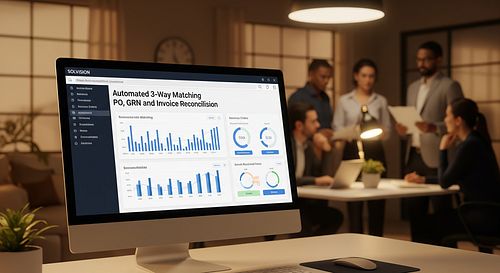
Workflow Routing: More significant exceptions get routed to the appropriate personnel automatically. A price discrepancy might go to procurement, while a quantity issue routes to the warehouse manager.
Exception Analytics: The system tracks exception patterns, helping you identify problematic suppliers, recurring issues, or process gaps that need attention.
Seamless ERP Integration
Solvision doesn’t operate in a vacuum. It integrates directly with your existing ERP system—whether that’s SAP, Oracle, Microsoft Dynamics, NetSuite, or others. Approved invoices flow automatically into your accounts payable system for payment processing, while matched data updates your financial records in real-time.
This integration eliminates duplicate data entry and ensures your financial data remains accurate and current across all systems.
Key Benefits of Solvision’s Automated 3-Way Matching
Dramatic Cost Reduction
Organizations implementing automated 3-way matching typically see their invoice processing costs drop by 60-80%. That per invoice cost? It falls to with automation. For our hypothetical company processing 10,000 invoices yearly, annual savings could reach or more.
These savings come from reduced labor costs, fewer errors requiring correction, eliminated duplicate payments, and captured early payment discounts.
Near-Elimination of Payment Errors and Overpayments
Solvision’s matching accuracy exceeds 95% out of the box and improves with use. The system catches discrepancies that human reviewers miss—especially when dealing with high transaction volumes. Pricing errors, quantity mismatches, unauthorized charges, and duplicate invoices get flagged before payment occurs.
One manufacturing company using Solvision reported recovering over in overpayments during their first year of implementation. That’s not revenue—that’s pure recovered cash.
Drastically Reduced Processing Time
Manual 3-way matching can take days or even weeks per invoice cycle. Automated matching happens in seconds. Most invoices process straight through without human intervention. Even exceptions that require review get presented with all relevant information immediately accessible, cutting resolution time by 70% or more.
Faster processing means better cash flow management, improved supplier relationships, and the ability to take advantage of early payment discounts that can save 2-3% on invoice values.
Enhanced Compliance and Audit Trail
Every action in Solvision’s system is logged and timestamped. You get complete visibility into who approved what, when, and why. This audit trail is invaluable for:
- Internal audits
- External financial audits
- Regulatory compliance (SOX, GDPR, etc.)
- Vendor disputes
- Fraud investigation
The system ensures proper segregation of duties and enforces approval hierarchies automatically, reducing compliance risk.
Improved Supplier Relationships
Late or incorrect payments strain vendor relationships. Automated processing ensures timely, accurate payments consistently. When disputes do arise, having all matching data instantly accessible helps resolve issues quickly and professionally.
Some organizations use their improved payment reliability to negotiate better terms, volume discounts, or priority service from suppliers.
Scalability Without Proportional Cost Increases
Here’s something beautiful about automation: it scales effortlessly. As your business grows and invoice volume increases, the system handles the load without requiring proportional increases in AP staffing. You can process 20,000 invoices almost as efficiently as 2,000.
Strategic Insights Through Data Analytics
Solvision’s system doesn’t just process invoices—it generates actionable intelligence. Built-in analytics reveal:
- Which suppliers have the highest exception rates
- Common types of discrepancies and their root causes
- Average processing times by vendor or category
- Payment pattern analysis
- Spend analysis across departments, categories, or projects
These insights empower better procurement decisions, supplier performance management, and cash flow forecasting.
Real-World Applications Across Industries
Manufacturing
Manufacturing companies deal with complex bill-of-materials, partial shipments, and frequent pricing adjustments. Solvision’s system handles these complexities, matching component-level details and managing partial deliveries efficiently.
Retail and E-commerce
High-volume, low-value transactions characterize retail. Automated matching processes thousands of invoices daily from diverse suppliers, ensuring accurate payment for everything from merchandise to logistics services.
Healthcare
Healthcare organizations manage invoices for medical supplies, pharmaceuticals, equipment, and services while maintaining strict regulatory compliance. Solvision’s audit trail and compliance features address healthcare’s unique requirements.
Hospitality
Hotels and restaurant chains purchase from numerous local suppliers across multiple locations. Centralized automated matching provides visibility and control while allowing location-specific procurement.
Construction
Project-based businesses need to match invoices to specific jobs for accurate project costing. Solvision’s system tags transactions to projects automatically, ensuring proper cost allocation.
Implementation Considerations
Integration Planning
Successful implementation starts with understanding your current systems. Solvision’s team typically conducts a thorough assessment of your:
- ERP or accounting system
- Procurement platform
- Document management systems
- Existing workflows and approval hierarchies
The integration is designed to minimize disruption, often running in parallel with existing processes initially.
Tolerance Setting
You’ll work with Solvision to establish matching tolerances that reflect your business reality. For example:
- Price variance threshold: perhaps 2% or , whichever is greater
- Quantity variance: maybe 5% for bulk commodities, 0% for precision components
- Amount variance: different thresholds for different spending categories
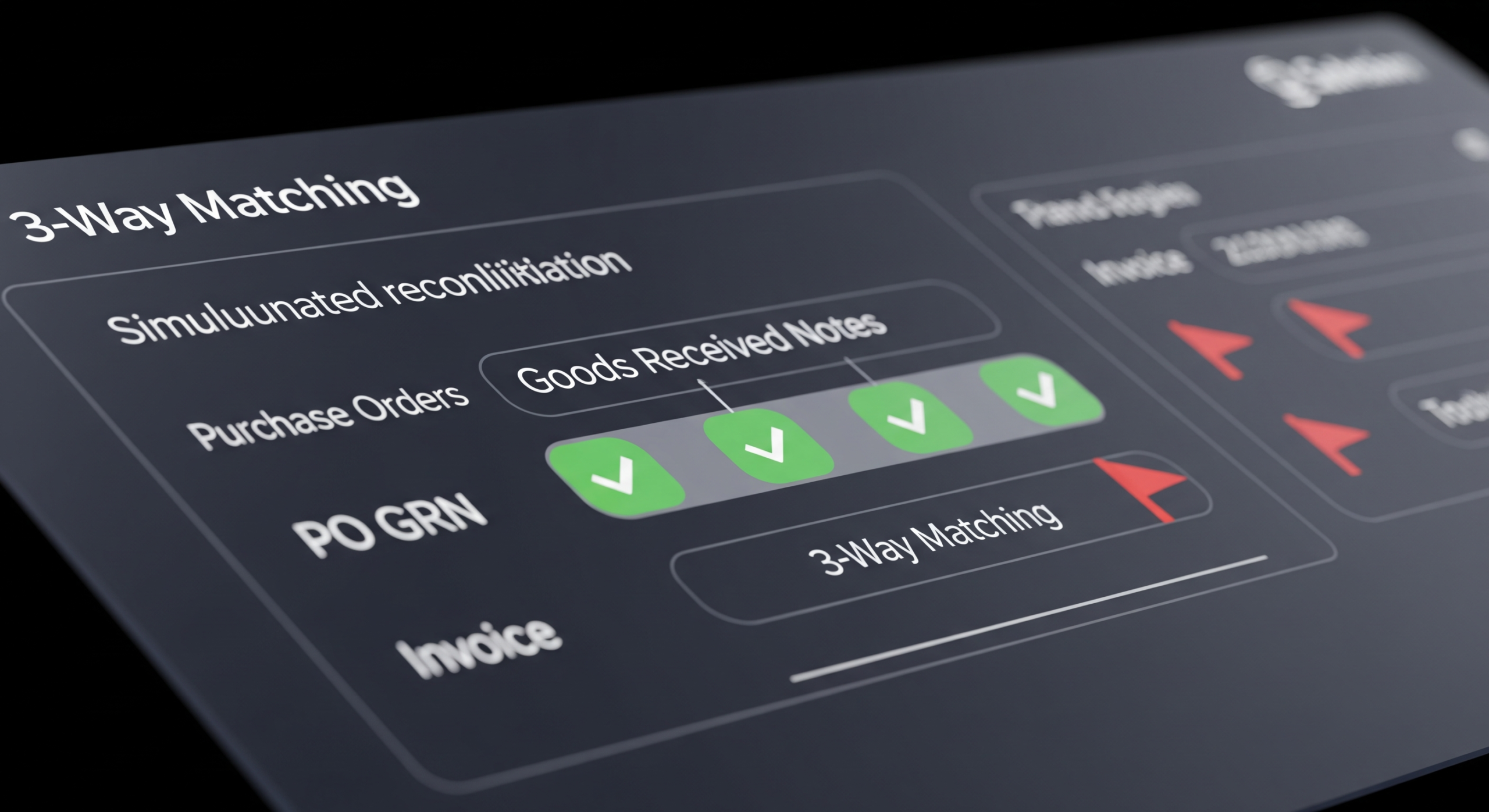
These tolerances ensure the system doesn’t flag trivial differences while catching material discrepancies.
Change Management
Technology’s only part of the equation. Your team needs to understand and embrace the new system. Solvision provides training and support to ensure smooth adoption. Most organizations find that AP staff welcome automation once they realize it eliminates tedious work and lets them focus on exception resolution and analysis.
Vendor Communication
Inform suppliers about your new automated system. Many organizations use this as an opportunity to push for standardized electronic invoicing, which further improves efficiency.
The ROI of Automated 3-Way Matching
Let’s break down the return on investment. Consider a company processing 15,000 invoices annually:
Current Manual Costs:
- Processing cost:
- Estimated annual overpayments (2% of spend):
- Late payment penalties:
- Lost early payment discounts (1% of ):
- Total annual cost:
With Solvision Automation:
- Processing cost:
- Overpayments (reduced by 95%):
- Late payment penalties (reduced by 90%):
- Captured discounts (80% capture): saved
- Total annual cost: + lost discount opportunity of
Net annual benefit:
Even accounting for implementation and licensing costs (typically for this size organization), ROI is achieved within 2-4 months. That’s exceptional by any measure.
Future of Automated Invoice Processing
Solvision continues evolving its platform with emerging technologies:
Artificial Intelligence and Machine Learning: The system gets smarter with every transaction, learning your specific business patterns and improving exception handling.
Predictive Analytics: Advanced algorithms forecast cash flow needs, identify at-risk supplier relationships, and predict which invoices might require manual intervention.
Blockchain Integration: For enhanced security and transparency, especially in complex supply chains with multiple intermediaries.
Mobile Accessibility: Approve exceptions on-the-go with mobile apps that provide full context and supporting documentation.
Advanced Fraud Detection: Pattern recognition algorithms identify suspicious invoicing patterns that might indicate fraud or system gaming.
Getting Started with Solvision
Implementation typically follows these phases:
- Discovery and Assessment (2-4 weeks): Understanding your current environment, pain points, and objectives.
- Configuration and Integration (6-8 weeks): Setting up the system, establishing tolerances, configuring workflows, and integrating with existing systems.
- Testing and Validation (2-4 weeks): Running parallel processes to verify accuracy and refine settings.
- Training and Rollout (2-3 weeks): Comprehensive training for AP staff and stakeholders.
- Go-Live and Optimization (Ongoing): Full deployment with continuous monitoring and refinement.
Most organizations achieve full operational status within 3-4 months and see measurable benefits within the first month of go-live.
Conclusion
Manual invoice processing isn’t just inefficient—it’s a competitive disadvantage. In an era where every dollar matters and financial agility determines success, automated 3-way matching has evolved from a nice-to-have to a business necessity.
Solvision’s automated 3-way matching for PO, GRN, and invoice reconciliation addresses the core challenges facing accounts payable departments: reducing exceptions, preventing overpayments, accelerating processing times, and providing the visibility needed for strategic financial management.
The technology works. The ROI is proven. The question isn’t whether to automate but when you’ll start capturing these benefits for your organization.
By implementing Solvision’s solution, you’re not just upgrading your AP process—you’re transforming it into a strategic asset that drives profitability, strengthens supplier relationships, and frees your team to focus on value-adding activities rather than tedious data comparison.
The future of accounts payable is automated, intelligent, and strategic. Solvision’s 3-way matching system brings that future to your organization today.
Frequently Asked Questions (FAQs)
Q1: What exactly is 3-way matching in the context of Solvision’s automation?
A1: In the context of Solvision’s automation, 3-way matching is the process of automatically comparing three key documents for consistency: the Purchase Order (PO), which is your initial agreement to buy; the Goods Receipt Note (GRN), confirming what you’ve received; and the supplier’s Invoice, which is the request for payment. Solvision’s system uses AI and machine learning to digitally read and cross-reference these documents to ensure all details, like quantities, prices, and terms, align before any payment is approved.
Q2: How does Solvision’s automated 3-way matching prevent overpayments?
A2: Solvision prevents overpayments through several layers of automated control. It meticulously flags any discrepancies between the PO, GRN, and Invoice (e.g., if the invoice price is higher than the PO, or if the quantity invoiced exceeds the quantity received). Crucially, it also includes robust duplicate invoice detection, ensuring you never pay for the same item twice. Payment is only released for invoices that have been fully validated and matched, eliminating costly errors and safeguarding your cash flow.
Q3: What types of exceptions does Solvision’s system automatically handle?
A3: Solvision’s system automatically identifies and flags a wide range of exceptions, which are deviations from the expected match. These can include quantity mismatches (invoiced vs. received vs. ordered), price discrepancies between the PO and invoice, missing GRNs or POs, incorrect vendor details, and even duplicate invoices. Once detected, these exceptions are automatically routed to the appropriate personnel for quick resolution, significantly reducing manual investigative work.
Q4: How quickly can a business expect to see a return on investment (ROI) from implementing Solvision’s automated 3-way matching?
A4: While the exact ROI timeline can vary based on factors like business size and current process complexity, many Solvision clients begin to see tangible benefits within weeks of deployment. Significant ROI, primarily through reduced operational costs (less manual labor), improved cash flow from preventing overpayments and capturing early payment discounts, and enhanced fraud prevention, is typically realized within the first 3 to 6 months. Solvision’s efficient implementation process is designed for rapid value realization.
Q5: Is Solvision’s automated 3-way matching solution suitable for businesses of all sizes?
A5: Absolutely. Solvision’s AI-powered automated 3-way matching solution is highly scalable and beneficial for businesses ranging from small to medium-sized enterprises (SMEs) to large, multinational corporations. Any business that processes a significant volume of invoices, regardless of industry (e.g., manufacturing, retail, professional services, healthcare), will experience substantial improvements in efficiency, accuracy, cost reduction, and fraud prevention by implementing Solvision.