


Digital Record Keeping in the UK with Solvision A Comprehensive Update for June 2025

The landscape of business administration in the United Kingdom has irrevocably shifted. The days of shoeboxes overflowing with receipts and dusty ledgers are firmly in the past. As we navigate mid-2025, digital record keeping is no longer a forward-thinking advantage; it is the baseline for compliance, efficiency, and strategic growth. Propelled by HMRC’s Making Tax Digital (MTD) initiative and the ever-increasing demand for real-time data, UK businesses are under more pressure than ever to adopt robust digital systems.
We will delve into the latest regulatory changes, explore the tangible benefits of a digital-first approach, and spotlight how innovative platforms like Solvision are empowering businesses to not only meet but exceed these new standards. If you are a small business owner, a sole trader, or a financial manager, this article is your essential roadmap to mastering digital compliance and unlocking new levels of operational excellence.
The UK’s Digital Mandate: Where We Stand in June 2025
The push towards digital is not a new phenomenon, but its enforcement and scope have reached a critical juncture. Understanding the current regulatory environment is the first step towards ensuring your business is compliant and future-proof.
Making Tax Digital (MTD): The Ongoing Revolution
HMRC’s flagship initiative, Making Tax Digital, continues to be the primary driver for the adoption of digital record keeping.
- MTD for VAT: This has been the law for all VAT-registered businesses for some time. By now, maintaining digital records and submitting VAT returns using MTD-compatible software is standard operating procedure. Businesses still failing to comply face a penalty points system and potential fines.
- MTD for Income Tax Self Assessment (ITSA): This is the next major frontier. After several delays, the timeline is now firmly set. The first phase is scheduled to begin in April 2026 for self-employed individuals and landlords with an income of more than £50,000. This means that for the current 2025/2026 tax year, affected taxpayers must be actively preparing. This involves choosing compliant software, digitising records, and understanding the new requirement for quarterly updates and an End of Period Statement (EOPs).
- MTD for Corporation Tax (CT): While a precise start date has not yet been mandated, a consultation has concluded, and the government has confirmed its intention to implement MTD for CT. The current projection suggests it will not be mandated before April 2026, but forward-thinking companies are already aligning their systems to be MTD-ready. This proactive approach minimises future disruption and aligns with modern accounting best practices.
The key takeaway for June 2025 is preparation. The grace period for MTD for ITSA is rapidly closing, and the direction for Corporation Tax is clear. Businesses must act now to implement compliant digital record-keeping solutions.
What is Solvision?
Solvision is a cloud-based software platform that provides end-to-end tools for digital record keeping, accounting, and financial management. It is fully recognised by HMRC as MTD-compliant for both VAT and the upcoming ITSA regulations. Its core philosophy is to centralise financial data, automate repetitive tasks, and present complex information in a clear, accessible way.
Key Features of Solvision (June 2025 Update)
Solvision’s latest iteration focuses on enhanced automation, deeper integration, and proactive compliance features.
1. MTD for ITSA Preparedness Module:
Solvision is ahead of the curve with a dedicated module designed for the 2026 MTD for ITSA deadline. This allows sole traders and landlords to:
- Track Income and Expenses in Real-Time: Using receipt scanning and bank feed integration, all transactions are captured digitally as they happen.
- Simulate Quarterly Updates: The platform can generate draft quarterly summaries, giving users a clear estimate of their tax liability throughout the year. This helps with financial planning and avoids “bill shock.”
- Collaborate with Accountants: Seamlessly grant your accountant access to review records and prepare for the End of Period Statement.
2. Intelligent Receipt and Invoice Processing (AI-Powered OCR):
The platform’s Optical Character Recognition (OCR) technology has been upgraded with a new AI engine. Users can simply snap a photo of a receipt or forward an email invoice to their unique Solvision address. The system automatically extracts key data like the vendor, date, amount, and VAT, and then categorises the expense, significantly reducing manual data entry.
3. Dynamic Bank Feed Integration:
Solvision connects securely with over 50 major UK banks and financial institutions. The latest update includes smarter reconciliation rules. The software learns from your past behaviour, suggesting categorisations for transactions, often turning the chore of bank reconciliation into a one-click process.
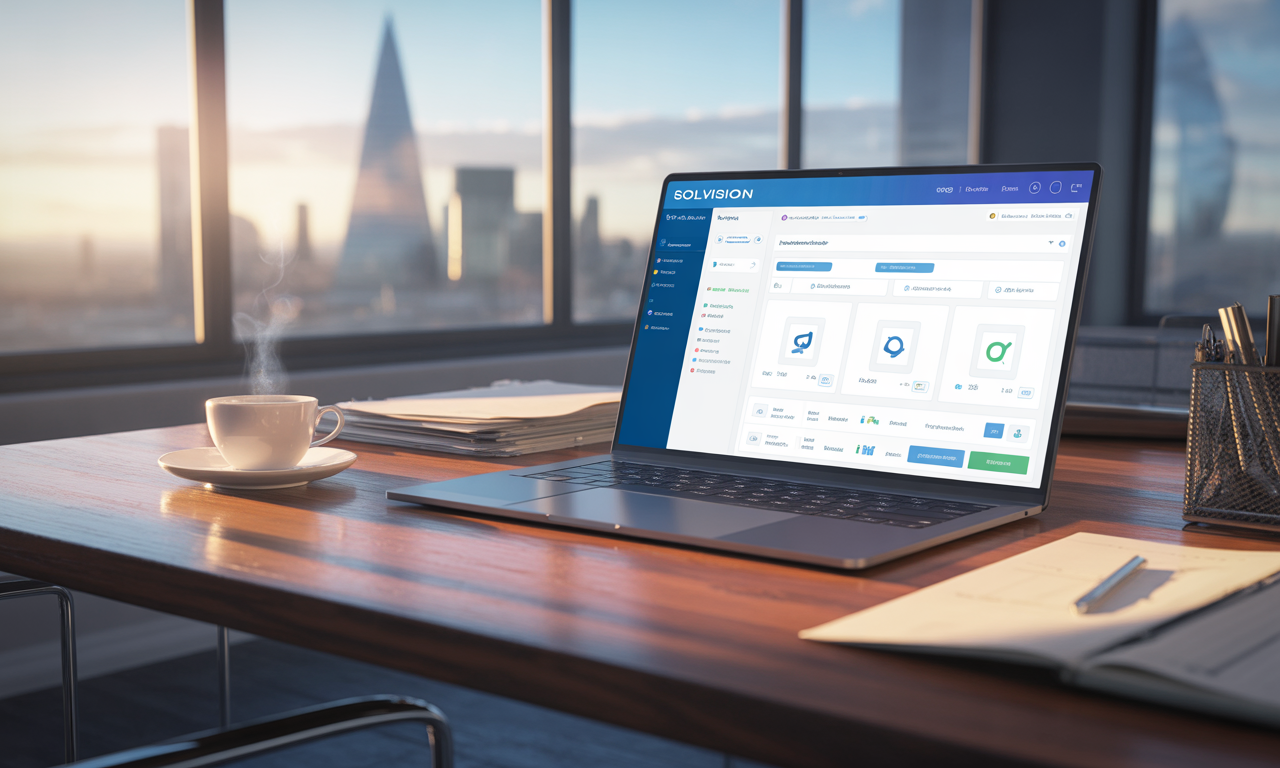
4. Real-Time Financial Dashboards:
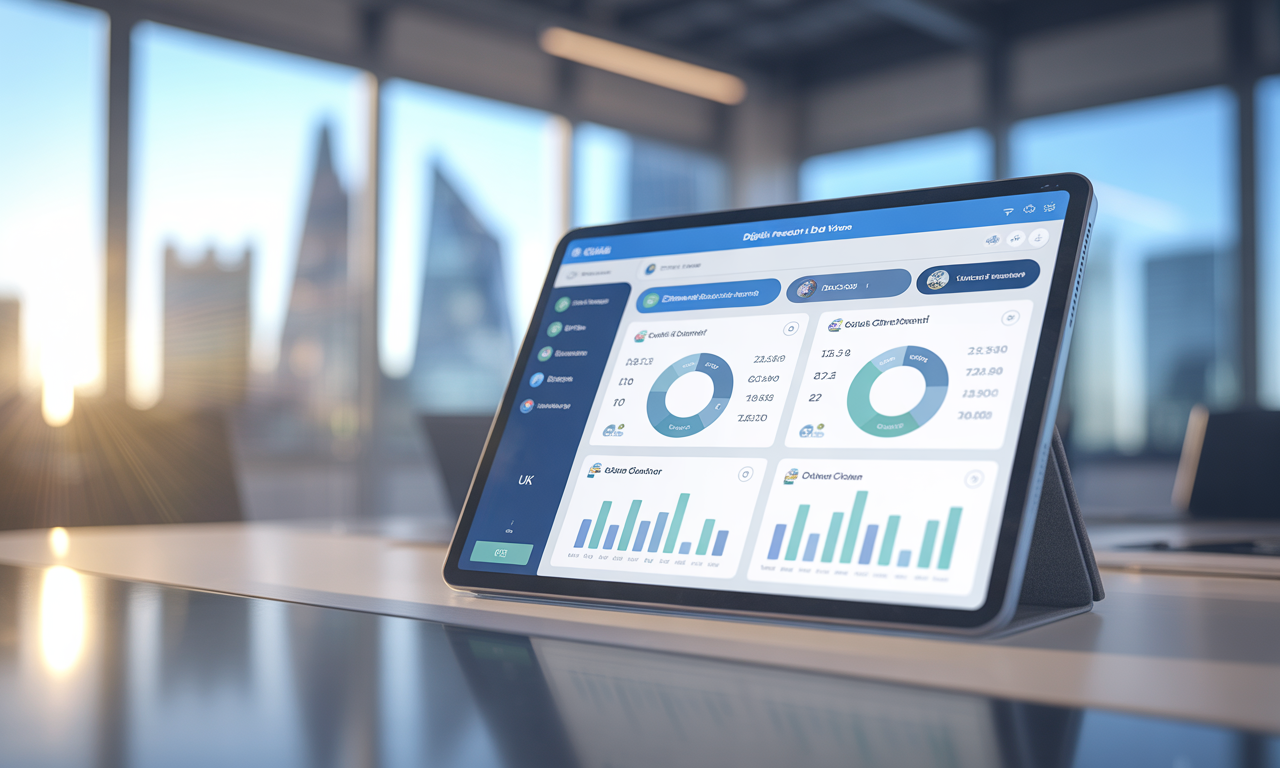
Knowledge is power. Solvision’s customisable dashboards provide an at-a-glance overview of your business’s financial health. Key metrics include:
- Profit & Loss
- Cash Flow Projections
- Outstanding Invoices (Aged Debtors)
- Upcoming Tax Liabilities (VAT & estimated Income Tax)
- Top Expense Categories
This real-time visibility allows business owners to make informed, data-driven decisions instantly.
5. Secure, Cloud-Based Document Storage:
Compliance isn’t just about numbers; it’s about the source documents. Solvision provides secure, GDPR-compliant cloud storage for all your financial records. Receipts, invoices, and bank statements are digitally linked to their corresponding transactions. This creates a clear, auditable trail that is invaluable during an HMRC inquiry. Records are protected with bank-level encryption and are accessible anytime, anywhere.
6. Scalable Project and Inventory Management:
Recognising that businesses grow, Solvision has expanded its project and inventory management features. You can now track profitability per project, manage stock levels, and set re-order points directly within the platform, integrating operational data with your financial records for a holistic business view.
Beyond Compliance: The Strategic Benefits of Adopting Solvision
While meeting HMRC requirements is essential, the true value of a system like Solvision lies in the operational efficiencies and strategic advantages it unlocks.
1. Drastic Reduction in Administrative Time
Manual bookkeeping is a time sink. By automating data entry, bank reconciliation, and reporting, Solvision frees up countless hours. This is time that business owners can reinvest into core activities like customer service, marketing, and product development – the things that actually drive growth.
2. Improved Cash Flow Management
Poor cash flow is the downfall of many otherwise healthy businesses. Solvision provides the tools to manage it proactively.
- Automated Invoice Reminders: Set up customisable email reminders for overdue invoices to get paid faster.
- Clear View of Payables and Receivables: The dashboard instantly shows you who owes you money and what bills are due, allowing for better planning.
- Cash Flow Forecasting: The platform analyses your historical data to project future cash positions, helping you anticipate shortfalls and plan for large expenditures.
3. Enhanced Accuracy and Reduced Human Error
Manual data entry is prone to errors – typos, transpositions, and miscategorisations that can lead to inaccurate financial reports and incorrect tax filings. Solvision’s automation and direct data feeds from banks minimise these risks, ensuring the integrity and accuracy of your financial data. This accuracy builds confidence, both for internal decision-making and for external reporting to HMRC or lenders.
4. Strengthened Collaboration with Accountants
The cloud-based nature of Solvision transforms the relationship between a business and its accountant. Instead of exchanging files at the end of a quarter, your accountant can have real-time access to your books. This enables them to provide proactive advice throughout the year, identify potential issues before they escalate, and offer more strategic, value-added services beyond simple tax preparation.
5. Unparalleled Data Security and Accessibility
Storing sensitive financial data requires robust security. Solvision employs state-of-the-art security protocols, including multi-factor authentication, data encryption in transit and at rest, and regular security audits. This is often far more secure than storing records on a local computer hard drive, which is vulnerable to theft, hardware failure, or cyber-attacks. Furthermore, being cloud-based means you can access your financial data securely from any device with an internet connection.
Making the Switch to Solvision: A Step-by-Step Guide
Transitioning to a new digital system can feel daunting, but Solvision has streamlined the process to make it as smooth as possible.
Choose Your Plan
Solvision offers tiered pricing plans tailored to different business sizes and needs, from sole traders to limited companies. All plans are MTD-compliant.
Onboarding and Data Import
The platform provides an intuitive setup wizard. You can import existing data from spreadsheets (like customer lists or opening balances) or even migrate from other accounting software like Xero or QuickBooks. Solvision’s UK-based support team is available to assist with this process.
Connect Your Bank Accounts
Securely link your business bank accounts using the Open Banking integration. This is a critical step that will automate the majority of your transaction recording.
Customise Your Settings
Set up your VAT scheme, invoice templates with your company branding, and automatic payment reminders. This initial customisation saves significant time later on.
Embrace the Workflow
Start using the mobile app to snap receipts on the go. Raise and send invoices directly from the platform. Review your dashboard weekly to stay on top of your finances. The key is to make Solvision the central hub for all your financial activities.
Conclusion: Seize the Digital Advantage in 2025
As of June 2025, the direction of travel for UK businesses is undeniable. The era of digital-by-default is here. The upcoming MTD for ITSA deadline is a firm reminder that compliance is non-negotiable.
However, viewing this shift solely through the lens of compliance is a missed opportunity. Embracing a powerful digital record-keeping solution like Solvision is a strategic business decision. It is an investment in efficiency, accuracy, and insight. It empowers you to save time, manage cash flow effectively, make smarter decisions, and ultimately, build a more resilient and profitable business.
Don’t wait for the deadlines to force your hand. The tools are available now. By adopting Solvision today, you can get ahead of the curve, transform your financial administration from a burden into a strategic asset, and position your business for success in 2026 and beyond.
Frequently Asked Questions (FAQs)
1. Is Solvision officially recognised by HMRC for Making Tax Digital (MTD)?
Yes, absolutely. Solvision is listed on the HMRC website as a software supplier that is fully compatible with Making Tax Digital for both VAT and the upcoming MTD for Income Tax Self Assessment (ITSA). This ensures that any submissions made through the platform meet all of HMRC’s technical and legal requirements.
2. I am a sole trader with an income below £50,000. Do I still need digital record keeping?
While the MTD for ITSA mandate starting in April 2026 initially applies to those with incomes over £50,000, it is widely expected to be extended to lower income thresholds in the future. Regardless of the mandate, adopting digital record keeping with a tool like Solvision now offers immense benefits. It simplifies your annual Self Assessment, provides a clear view of your business performance, saves you significant time, and prepares you for when the rules do change.
3. How secure is my financial data on a cloud platform like Solvision?
Solvision takes data security extremely seriously. They use bank-level 256-bit SSL encryption for all data transmitted between your device and their servers. Your data is stored in secure, GDPR-compliant data centres with multiple layers of physical and digital protection. This is significantly more secure than storing records on a personal computer, which is susceptible to viruses, hard drive failure, or theft.
4. Can I switch to Solvision from my current accounting software? What about my historical data?
Yes, switching is designed to be straightforward. Solvision provides tools and guides for migrating from other popular platforms like QuickBooks, Xero, or Sage. You can typically import key data such as your chart of accounts, customer and supplier lists, and opening balances. Their UK-based customer support team can also provide guidance to ensure a smooth transition of your historical financial data.
5. How much time can I realistically save by using Solvision?
The time savings vary by business, but they are substantial. By automating tasks like data entry from receipts (via OCR), bank transaction categorisation (via bank feeds and AI), and generating financial reports, businesses regularly report saving anywhere from 5 to 15 hours per month on bookkeeping and admin. This reclaimed time can be used for revenue-generating activities, making the investment in the software highly profitable.