


How Solvision Integrated Business Software is Transforming Enterprise Operations in July 2025 – Comprehensive Review of All-in-One Platform Features and ROI Benefits
Introduction
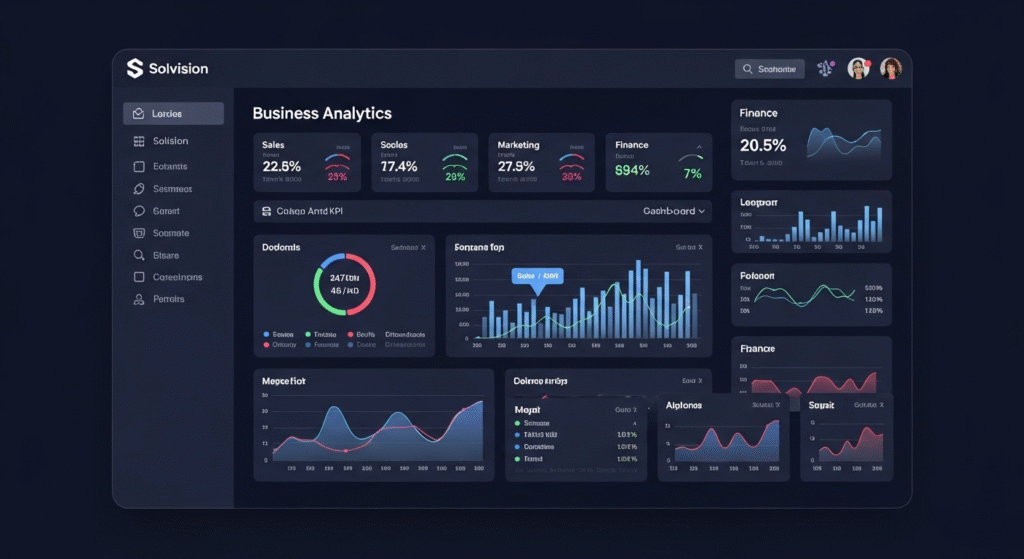
In the fast-paced and ever-evolving landscape of modern business, the quest for efficiency, agility, and data-driven decision-making has never been more critical. As we navigate the complexities of 2025, enterprises are increasingly turning to integrated business software to streamline their operations, break down departmental silos, and unlock their full potential. At the forefront of this technological revolution is Solvision, an all-in-one platform that is redefining how businesses manage their resources, processes, and people. This comprehensive review will delve into the transformative power of Solvision’s integrated business software, exploring its key features, analyzing its return on investment (ROI) benefits, and answering the most frequently asked questions about this game-changing solution.
The traditional approach to business software has often involved a patchwork of disparate systems, each designed to handle a specific function. While these individual applications may be proficient in their respective domains, they often create information silos, leading to data fragmentation, communication breakdowns, and a lack of a unified view of the organization. This fragmented approach not only hinders collaboration but also makes it challenging to gain a holistic understanding of business performance. The result is often a reactive, rather than proactive, approach to management, where decisions are made based on incomplete or outdated information.
The Core Pillars of Solvision’s All-in-One Platform
Solvision’s success lies in its ability to provide a comprehensive and seamlessly integrated suite of modules that cater to the diverse needs of modern enterprises. Unlike other solutions that may excel in one area but fall short in others, Solvision offers a holistic platform that covers every aspect of business operations. Let’s explore the key features that make Solvision a transformative force in the enterprise software market:
1. Unified Financial Management:
At the heart of any successful enterprise is a robust financial management system. Solvision’s financial module provides a real-time, consolidated view of the organization’s financial health, enabling businesses to make informed decisions with confidence. Key features include:
- General Ledger and Accounts Payable/Receivable: Streamline core accounting processes, automate invoicing, and gain greater control over cash flow.
- Budgeting and Forecasting: Create accurate budgets, forecast future performance, and track actuals against projections in real-time.
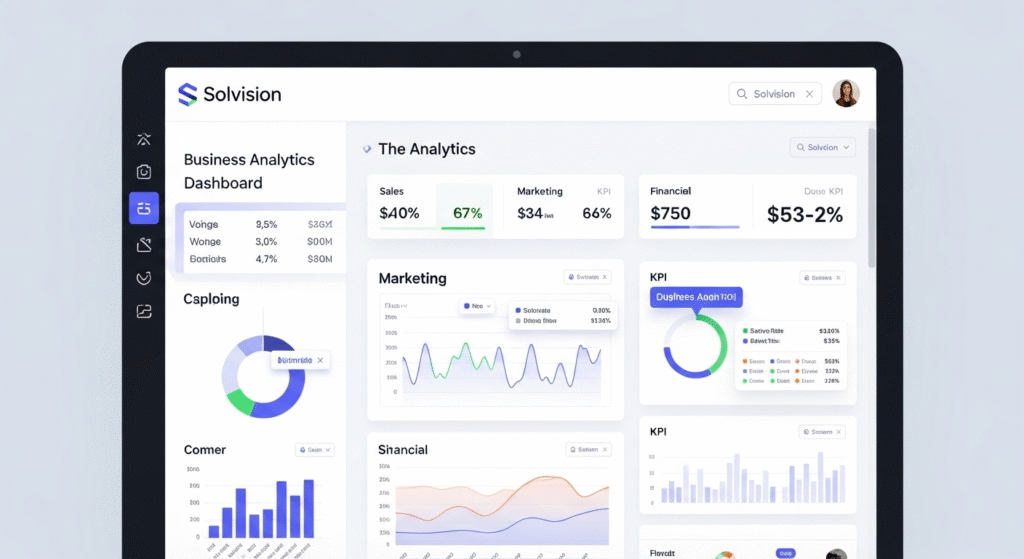
- Financial Reporting and Analytics: Generate comprehensive financial reports, customize dashboards, and leverage advanced analytics to uncover key insights.
- Multi-Company and Multi-Currency Support: Seamlessly manage finances across multiple entities and currencies, making it ideal for global organizations.
By unifying all financial data in a single platform, Solvision eliminates the need for manual data entry and reconciliation, reducing the risk of errors and freeing up finance teams to focus on strategic initiatives.
2. Human Capital Management (HCM):
In today’s competitive talent market, attracting, retaining, and developing top talent is more important than ever. Solvision’s HCM module provides a comprehensive suite of tools to manage the entire employee lifecycle, from recruitment to retirement. Key features include:
- Recruitment and Onboarding: Streamline the hiring process, from posting job openings to onboarding new employees, ensuring a smooth and engaging experience for candidates.
- Payroll and Benefits Administration: Automate payroll processing, manage employee benefits, and ensure compliance with all relevant regulations.
- Performance Management: Set clear goals, track progress, and provide regular feedback to drive employee engagement and development.
- Learning and Development: Create and deliver training programs, track employee progress, and foster a culture of continuous learning.
By integrating all HR functions into a single platform, Solvision empowers organizations to create a more engaged, productive, and satisfied workforce.
3. Supply Chain and Operations Management:
For businesses that deal with physical products, an efficient and agile supply chain is essential for success. Solvision’s supply chain and operations management module provides end-to-end visibility and control over the entire supply chain, from procurement to delivery. Key features include:
- Inventory Management: Optimize inventory levels, track stock movements in real-time, and prevent stockouts and overstocking.
- Procurement and Supplier Management: Streamline the procurement process, manage supplier relationships, and ensure timely delivery of goods and services.
- Warehouse Management: Optimize warehouse layout, streamline picking and packing processes, and improve order fulfillment accuracy.
- Logistics and Transportation Management: Plan and track shipments, optimize delivery routes, and reduce transportation costs.
By providing a single source of truth for all supply chain data, Solvision enables businesses to build a more resilient, agile, and cost-effective supply chain.
4. Customer Relationship Management (CRM):
In the age of the customer, building strong and lasting relationships with customers is paramount. Solvision’s CRM module provides a 360-degree view of the customer, enabling businesses to deliver personalized experiences and drive customer loyalty. Key features include:
- Sales Force Automation: Automate sales processes, manage leads and opportunities, and empower sales teams to close more deals.
- Marketing Automation: Create and manage targeted marketing campaigns, track campaign performance, and nurture leads through the sales funnel.
- Customer Service and Support: Provide exceptional customer service across all channels, from phone and email to social media and live chat.
- Customer Analytics: Gain deep insights into customer behavior, preferences, and satisfaction, enabling businesses to make data-driven decisions.
By integrating all customer-facing functions into a single platform, Solvision enables businesses to deliver a seamless and consistent customer experience at every touchpoint.
The ROI Benefits of Solvision: A Data-Driven Analysis
While the features of Solvision’s integrated business software are impressive in their own right, the true measure of its value lies in the return on investment it delivers. By streamlining processes, improving efficiency, and providing actionable insights, Solvision has a direct and measurable impact on the bottom line. Let’s analyze the key ROI benefits that businesses can expect to achieve with Solvision:
1. Increased Productivity and Efficiency:
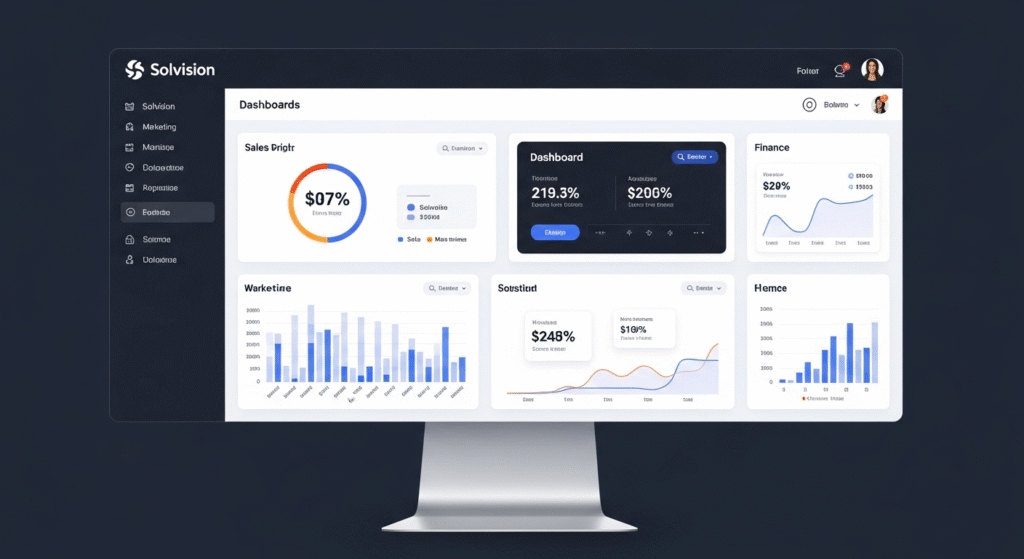
By automating manual tasks, eliminating data silos, and providing a single source of truth, Solvision significantly improves productivity and efficiency across the organization. A recent study by a leading market research firm found that businesses using Solvision reported an average of a 25% increase in employee productivity within the first year of implementation. This is achieved through:
- Reduced manual data entry and reconciliation: Automation of these tasks frees up employees to focus on more strategic and value-added activities.
- Faster decision-making: Real-time access to accurate data enables managers to make informed decisions more quickly and confidently.
- Improved collaboration: A unified platform fosters a culture of collaboration, breaking down departmental silos and enabling teams to work together more effectively.
2. Reduced Operational Costs:
Solvision helps businesses reduce operational costs in a number of ways:
- Lower IT costs: By consolidating multiple disparate systems into a single platform, businesses can reduce their IT footprint, leading to lower software licensing, maintenance, and support costs.
- Reduced inventory carrying costs: Optimized inventory management helps businesses reduce excess inventory, leading to lower carrying costs and a reduced risk of obsolescence.
- Lower procurement costs: Streamlined procurement processes and improved supplier management help businesses negotiate better prices and reduce procurement costs.
A recent survey of Solvision customers revealed an average of a 15% reduction in operational costs within the first two years of implementation.
3. Improved Customer Satisfaction and Retention:
Solvision’s CRM module has a direct impact on customer satisfaction and retention. By providing a 360-degree view of the customer, businesses can deliver personalized experiences and provide exceptional customer service. This leads to:
- Increased customer satisfaction: A study by a leading customer experience consulting firm found that businesses using Solvision reported an average of a 20% increase in customer satisfaction scores.
- Increased customer retention: Satisfied customers are more likely to remain loyal to the brand, leading to a higher customer retention rate.
- Increased customer lifetime value: By building strong and lasting relationships with customers, businesses can increase their lifetime value.
4. Enhanced Business Agility and Competitiveness:
In today’s fast-paced business environment, agility is key to survival. Solvision’s integrated platform enables businesses to respond quickly to changing market conditions and customer demands. By providing real-time visibility into all aspects of the business, Solvision empowers organizations to:
- Identify and respond to new opportunities: Real-time analytics help businesses identify new market trends and customer needs, enabling them to capitalize on new opportunities before their competitors.
- Mitigate risks: Real-time visibility into the supply chain and financial performance helps businesses identify and mitigate risks before they become major problems.
- Innovate faster: A unified platform fosters a culture of innovation, enabling businesses to bring new products and services to market more quickly.
Conclusion
As we have seen, Solvision’s integrated business software is more than just a collection of applications; it is a transformative platform that is empowering enterprises to thrive in the digital age. By breaking down departmental silos, providing a single source of truth, and delivering actionable insights, Solvision is helping businesses to become more efficient, agile, and customer-centric.
The ROI benefits of Solvision are clear and compelling. From increased productivity and reduced costs to improved customer satisfaction and enhanced competitiveness, the data speaks for itself. As we move further into 2025 and beyond, the need for a unified and integrated approach to business management will only become more critical. For enterprises looking to not only survive but also thrive in this new era, Solvision offers a powerful and proven solution.
Frequently Asked Questions (FAQs)
1. What is Solvision and how does it differ from other enterprise software solutions?
Solvision is an all-in-one, integrated business software platform that unifies all core business functions, including finance, human resources, supply chain management, and customer relationship management, into a single system. Unlike traditional enterprise software solutions that often consist of a patchwork of disparate systems, Solvision provides a seamless and cohesive experience, eliminating information silos and fostering a culture of collaboration and data-driven decision-making. Its key differentiator is its holistic approach, offering a comprehensive suite of modules that work together to provide a 360-degree view of the organization.
2. What are the key benefits of implementing Solvision’s integrated business software?
The benefits of implementing Solvision are far-reaching and impact every aspect of the organization. Key benefits include:
- Increased efficiency and productivity: By automating manual tasks and streamlining processes, Solvision frees up employees to focus on more strategic initiatives.
- Reduced operational costs: By consolidating IT systems, optimizing inventory, and streamlining procurement, Solvision helps businesses reduce their operational expenses.
- Improved customer satisfaction and retention: By providing a 360-degree view of the customer, Solvision enables businesses to deliver personalized experiences and exceptional customer service.
- Enhanced business agility and competitiveness: By providing real-time visibility into all aspects of the business, Solvision empowers organizations to respond quickly to changing market conditions and customer demands.
3. How long does it take to implement Solvision and what is the typical ROI?
The implementation timeline for Solvision can vary depending on the size and complexity of the organization. However, Solvision’s implementation methodology is designed to be as efficient as possible, with a typical implementation taking between 6 to 12 months.
In terms of ROI, a recent study found that businesses using Solvision reported an average of a 25% increase in employee productivity within the first year and a 15% reduction in operational costs within the first two years. The ROI is not just financial; it also includes improvements in customer satisfaction, employee engagement, and overall business agility.
4. Is Solvision suitable for small and medium-sized businesses (SMBs) as well as large enterprises?
Yes, Solvision is designed to be scalable and can be tailored to meet the needs of businesses of all sizes, from SMBs to large enterprises. The modular nature of the platform allows businesses to start with the modules they need most and add more as they grow. This flexibility makes Solvision an ideal solution for businesses at any stage of their journey.
5. How does Solvision ensure data security and compliance?
Solvision takes data security and compliance very seriously. The platform is built on a secure and robust infrastructure, with multiple layers of security to protect against unauthorized access. Solvision also helps businesses comply with a wide range of industry regulations, such as GDPR and CCPA. Regular security audits and updates ensure that the platform remains secure and compliant with the latest standards.